

Shipping containers are vital for transporting Easy Open Ends globally, ensuring that mechanisms are in place for efficient packing and cost management 1. With specific requirements for container types—either 20-foot or 40-foot—businesses like mine need to understand how these containers are utilized in terms of quantity and weight.
The loading plans during shipments are crucial for optimizing the space within these containers while adhering to legal standards 2. These involve intricate arrangements to balance the number of ends in the container with the permissible weight, preventing damage, and maintaining efficient shipping costs.
Understanding these plans is key for making informed decisions about freight solutions 3 that ensure products arrive safely and cost-effectively.
Can you provide detailed loading plans for 20′ and 40′ containers, including the maximum quantity and weight of Easy Open Ends per container?
For efficient trade logistics 4, providing detailed loading plans is essential. These plans encompass maximizing container space and minimizing shipping expenses, ensuring that Easy Open Ends are packed securely.
A typical 20-foot container accommodates 16 to 18 pallets, translating to approximately 1.1 to 1.5 million Easy Open Ends. In contrast, a 40-foot container allows for roughly double the capacity, supporting 26 to 28 pallets, resulting in 1.6 to 3.8 million pieces. Ensuring safe transport means complying with weight restrictions 5—staying under 18 tons for a 20-footer and under 28 tons for a 40-footer.
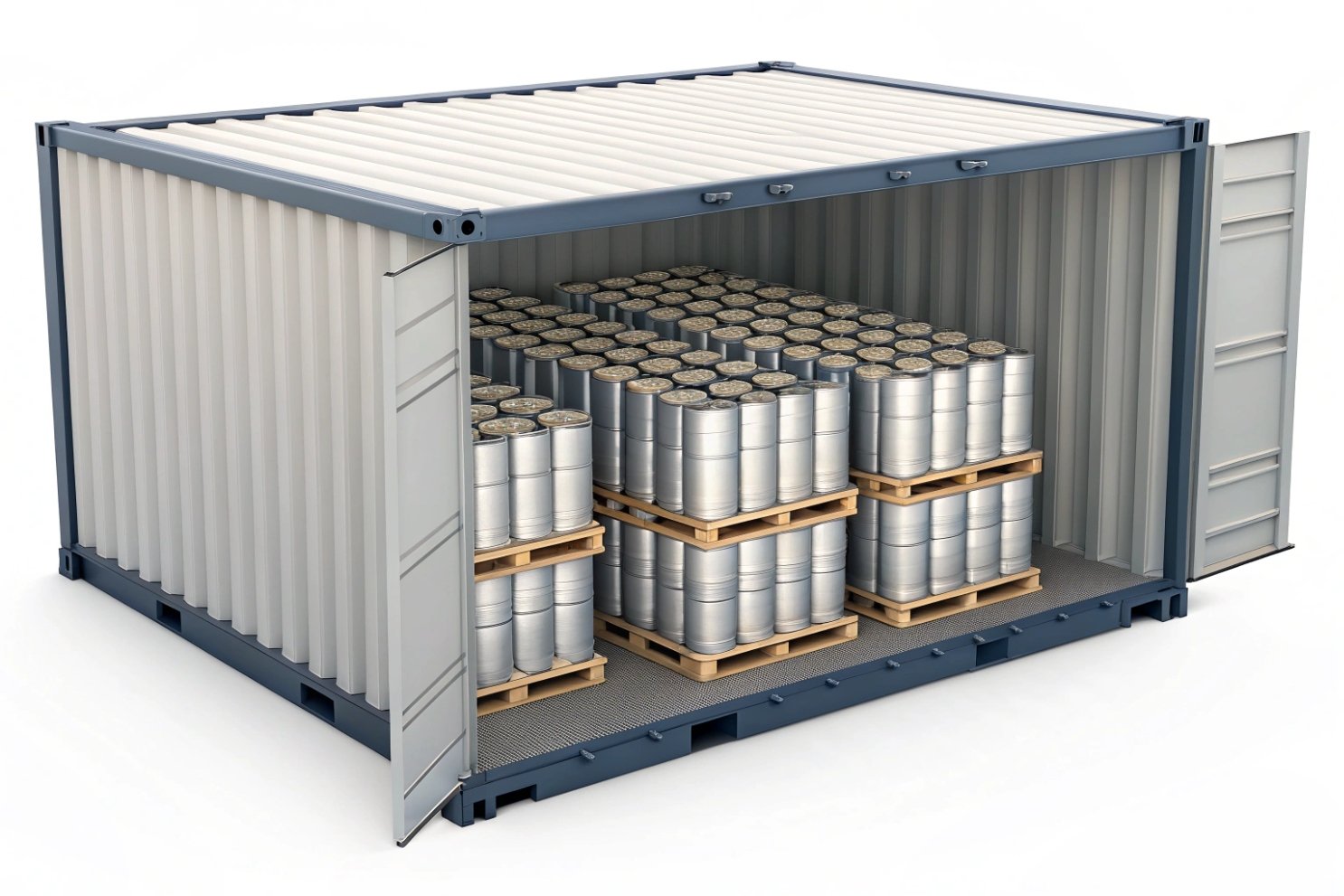
Considering these factors helps suppliers adjust diameter, height, and packaging configurations, all contributing to optimized shipping solutions that comply with legal weight restrictions.
Container Specifications for Loading Plan
| Container Size | Volume (CBM) | Max Payload (kg) | Typical Capacity (pcs) |
|---|---|---|---|
| 20′ Container | 33 | 21,700 | 1.1 – 1.5 million |
| 40′ Container | 67 | 26,760 | 3.2 – 3.8 million |
Optimal Loading Methods
- Pallet Distribution: Arrange pallets using a rotational loading pattern to efficiently utilize space.
- Floor Loading: Use extra cartons to fill gaps for maximum volume usage.
- Software Utilization: Specialized software 6 calculates configurations for stability and CBM utilization.
How do you optimize container utilization for my Easy Open Ends to minimize freight costs and ensure efficient shipping from China?
Optimizing container utilization is crucial for reducing freight costs and expediting delivery. Achieving this involves strategic planning using precise packing techniques 7 that maximize shipments.
Container utilization involves assessing both weight and volume constraints. With Easy Open Ends being relatively light, full-volume usage often precedes reaching weight limits. This requires strategic stacking and carton arrangements to maximize available space while maintaining load security.

Using specialized software aids these calculations, ensuring each container achieves optimal CBM usage—85-92%—without compromising transit safety or efficiency.
Enhancing Freight Efficiency
- Weight Management: Achieve compliance with road weight while maximizing item count.
- Volume Usage: Utilize full container volume before hitting weight cap.
- Cost Reduction: Larger containers offer lower cost per unit shipped.
What are your packaging specifications for containerized Easy Open Ends to prevent damage during sea transit?
Proper packaging is crucial in preventing damage to Easy Open Ends during sea transit. Ensuring items remain intact involves robust strategies to minimize risks such as breakage or deformation.
Packaging specifications require careful planning, starting with securing Easy Open Ends in cartons stacked onto wooden pallets 8. These pallets are arranged using pinwheel patterns to utilize space effectively, sometimes stacking pallets two high according to specifications.
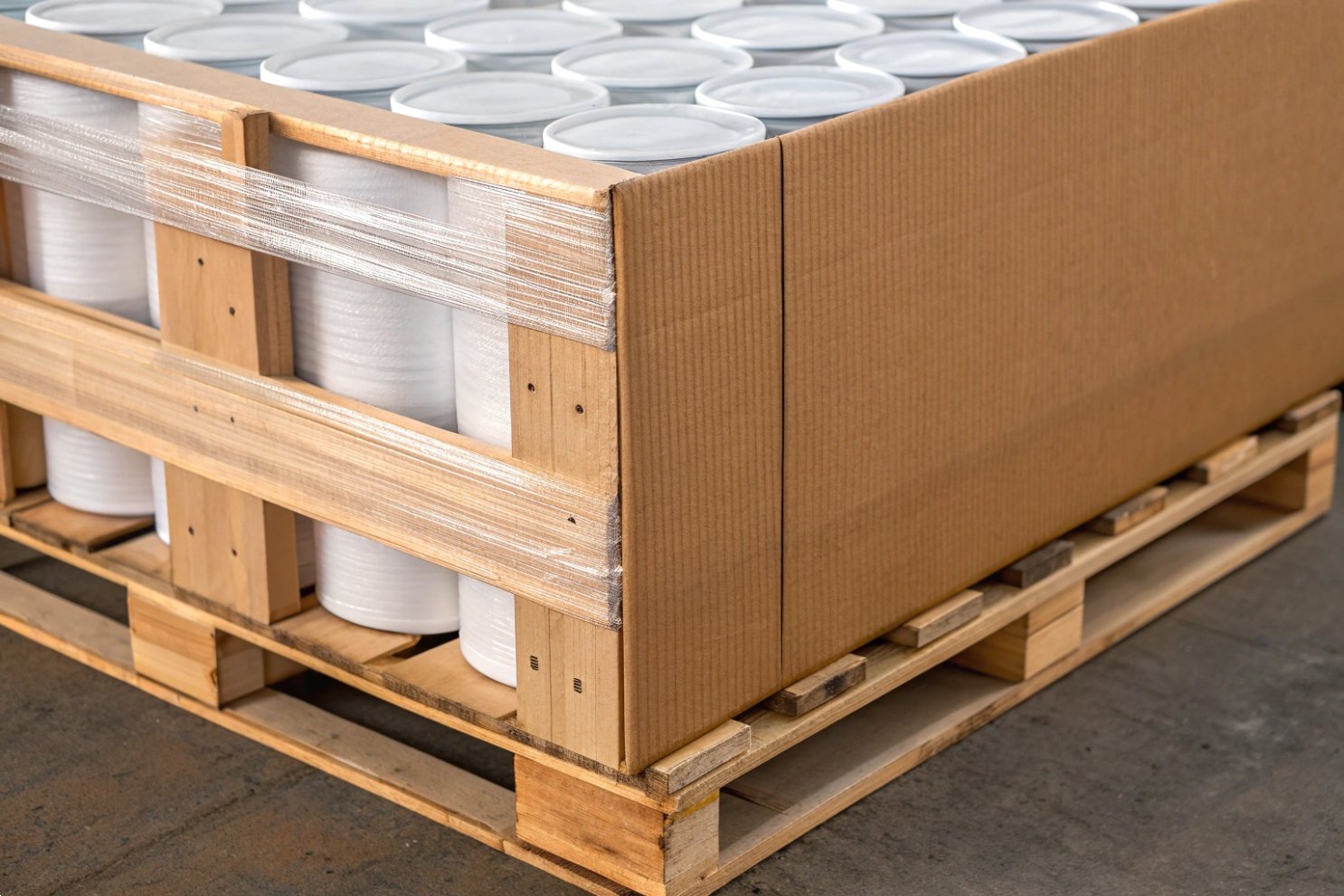
Final plans incorporate protective measures like padded corners and shrink wraps 9 to reinforce security. Floor loading—packing cartons into gaps within the container—further stabilizes the cargo during transit.
Key Packaging Strategies
- Carton and Pallet Use: Secure ends in cartons before positioning on pallets.
- Stacking High: Utilize double stacking where applicable for height utilization.
- Defensive Wrapping: Use wrapping and padding to reinforce package security.
Can I request specific container types or loading configurations for my Easy Open Ends, and what are the cost implications?
Customization in container types and configurations enables better adaptation to unique shipping needs, albeit with associated cost considerations.
Specific container types, such as open-top containers 10 or side-access options, simplify loading but may affect freight costs. Loading configurations—such as prioritizing specific shipping conditions—depend on destination constraints, load fragility, and expected conditions during transit.

Ultimately, custom requests require adaptations in packing techniques and materials to ensure optimal performance and safety during transit, potentially impacting overall expenses.
Cost Implications of Custom Requests
- Container Type Variability: Special containers offering easier loading may incur a premium.
- Loading Configuration Adjustments: Custom strategies can increase operational costs due to special handling requirements.
- Adaptation Needs: Custom requests might necessitate advanced tools or materials, affecting shipping expenses.
Conclusion
Understanding and applying strategic container loading plans not only reduces shipping costs but also ensures the secure and efficient delivery of Easy Open Ends globally.
Footnotes
1. Learn how cost management strategies improve business profitability and operational efficiency. ↩︎
2. Overview of international standards that ensure quality, safety, and efficiency across industries. ↩︎
3. Discover various freight services tailored for large-scale industrial shipping needs. ↩︎
4. Insights into how logistics performance impacts global trade and economic growth. ↩︎
5. Detailed guide on standard container dimensions and maximum payload capacities. ↩︎
6. Explore advanced load planning software for optimizing container and truck space. ↩︎
7. Best practices for packing and securing goods for safe international transport. ↩︎
8. Information on different types of pallets and their roles in global logistics. ↩︎
9. Explanation of shrink wrap materials used for stabilizing and protecting palletized cargo. ↩︎
10. Specifications for various container types including open-top and flat-rack options. ↩︎