
Ensuring the recyclability and reuse of Easy Open Ends is crucial for substantiating our brand’s environmental claims. My experience tells me that understanding this not only satisfies regulatory demands but also enhances brand credibility in the eco-conscious market.
Easy Open Ends offer high recyclability, made predominantly from tinplate or aluminum, they can be recycled repeatedly without significant loss of quality. This ability makes them integral to effective metal recycling streams, enhancing environmental sustainability efforts.
Establishing this recyclability is key not just for manufacturing, but also for enhancing brand image among eco-aware consumers 1, making it an essential component of environmental information disclosures.
What specific information can you provide about the recyclability and reuse potential of your Easy Open Ends to support my brand’s environmental claims?
Easy Open Ends’ recyclability forms the cornerstone of our green initiative, largely due to their metal composition, which facilitates extensive recycling without degradation.
These ends are made from aluminum or tinplate, both of which are fully recyclable and compatible with standard recycling procedures, ensuring that they contribute positively to a sustainable environment.
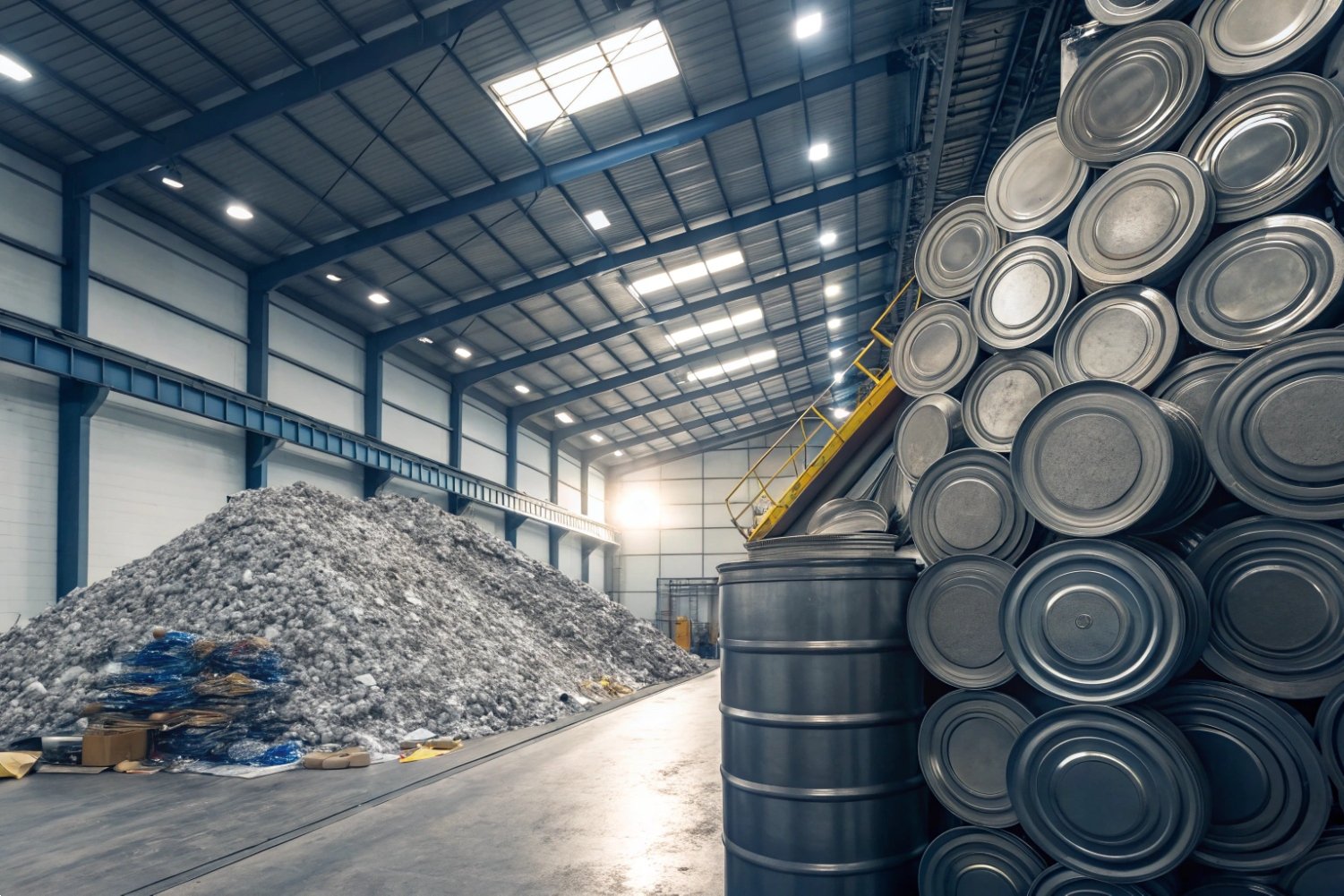
The recycling process for Easy Open Ends involves shredding, contaminant removal, melting, and reshaping, turning used ends back into reusable metal sheets. This process showcases a reduction in resource waste 2 and supports sustainability by mitigating the need for new raw materials, emphasizing a continuous cycle of reuse.
Recyclability and Reuse Table
| Attribute | Details |
|---|---|
| Material Composition | Aluminum or Tinplate |
| Recyclability Rate | 100%, without quality degradation through recycling |
| Environmental Benefit | Reduces waste, conserves resources, and lowers emissions |
How do your Easy Open Ends, made from tinplate, contribute to a circular economy, and what certifications support these claims?
Tinplate Easy Open Ends are critical to the circular economy 3 because they enable the repeated utilization of resources, thus minimizing waste.
Tinplate ends support sustainability through a closed-loop recycling process, continually returning goods to the production cycle, which is substantiated by certifications like ISO 14001 for environmental management.
These ends effectively reduce the necessity for new materials by allowing recycled material to retain its quality. This process supports environmental goals by promoting closed-loop cycles 4, which limit environmental impact and encourage sustainable resource management. Certifications offer a verifiable measure of adherence to these practices, ensuring accountability.
Circular Economy Contribution Table
| Feature | Contribution to Circular Economy |
|---|---|
| Closed-Loop Process | Enables continual use without quality loss |
| Certification | ISO 14001 5 for sustainable resource management |
| Environmental Impact | Lowers carbon emissions and conserves natural resources |
Can you provide technical data or industry standards on the post-consumer recycling rates for Easy Open Ends and tinplate in general?
The recycling rates for tinplate and Easy Open Ends showcase their significant role in advanced waste management systems 6, boasting high recovery percentages.
Recycling rates for these materials often surpass 70%, with industry standards and guidelines from organizations like the Metal Packaging Manufacturers Association ensuring effective recycling processes.

Tinplate’s robust recycling process ensures high post-consumer recovery 7, supporting a circular economy. These standards guide industries in maintaining high recycling efficiencies, significantly diminishing the need for newly extracted materials, therefore preserving environmental resources.
Post-Consumer Recycling Data Table
| Metric | Value |
|---|---|
| Post-Consumer Rate | Over 70% for tinplate and aluminum |
| Industry Standards | Metal Packaging Manufacturers Association 8 guidelines |
| Environmental Benefit | High recovery aids in reducing raw material extraction |
Are there any cost implications for Easy Open Ends that are specifically designed or certified for optimal recycling and reuse?
While initial investment in designing optimized Easy Open Ends may be higher, the long-term economic and environmental benefits outweigh these costs.
Design enhancements for recyclability might slightly elevate initial costs due to specialized materials and compliance with certifications. However, the lifecycle savings gained through reduced material costs and environmental compliance incentives are significant.
Optimized designs increase recyclability through intelligent material selection and adoption of efficient processes. Although upfront costs might be higher, they eventually reduce overall expenses by ensuring materials meet recycling standards 9. These practices align financial objectives with sustainability goals, fostering eco-friendly industrial practices 10.
Cost Implication Analysis Table
| Factor | Cost Impact |
|---|---|
| Initial Investment | Higher due to advanced materials and certifications |
| Long-Term Savings | Lower operational costs through material efficiency |
| Sustainability Focus | Ensures compliance with environmental standards |
Conclusion
Easy Open Ends not only support our brand’s environmental goals through their high recyclability but also play a substantial role in promoting a circular economy.
Footnotes
1. Strategies for marketing products to environmentally conscious consumers. ↩︎
2. Overview of sustainable materials management to reduce environmental waste. ↩︎
3. Introduction to circular economy principles and resource efficiency. ↩︎
4. Technical explanation of closed-loop recycling systems in manufacturing. ↩︎
5. Official standard for implementing an effective environmental management system. ↩︎
6. Global perspectives on urban solid waste management and recovery. ↩︎
7. Understanding the lifecycle and recovery of post-consumer waste materials. ↩︎
8. Industry association providing guidelines for metal packaging sustainability. ↩︎
9. International technical standards for material quality and recycling compliance. ↩︎
10. UN guidelines for promoting cleaner and sustainable industrial production. ↩︎