
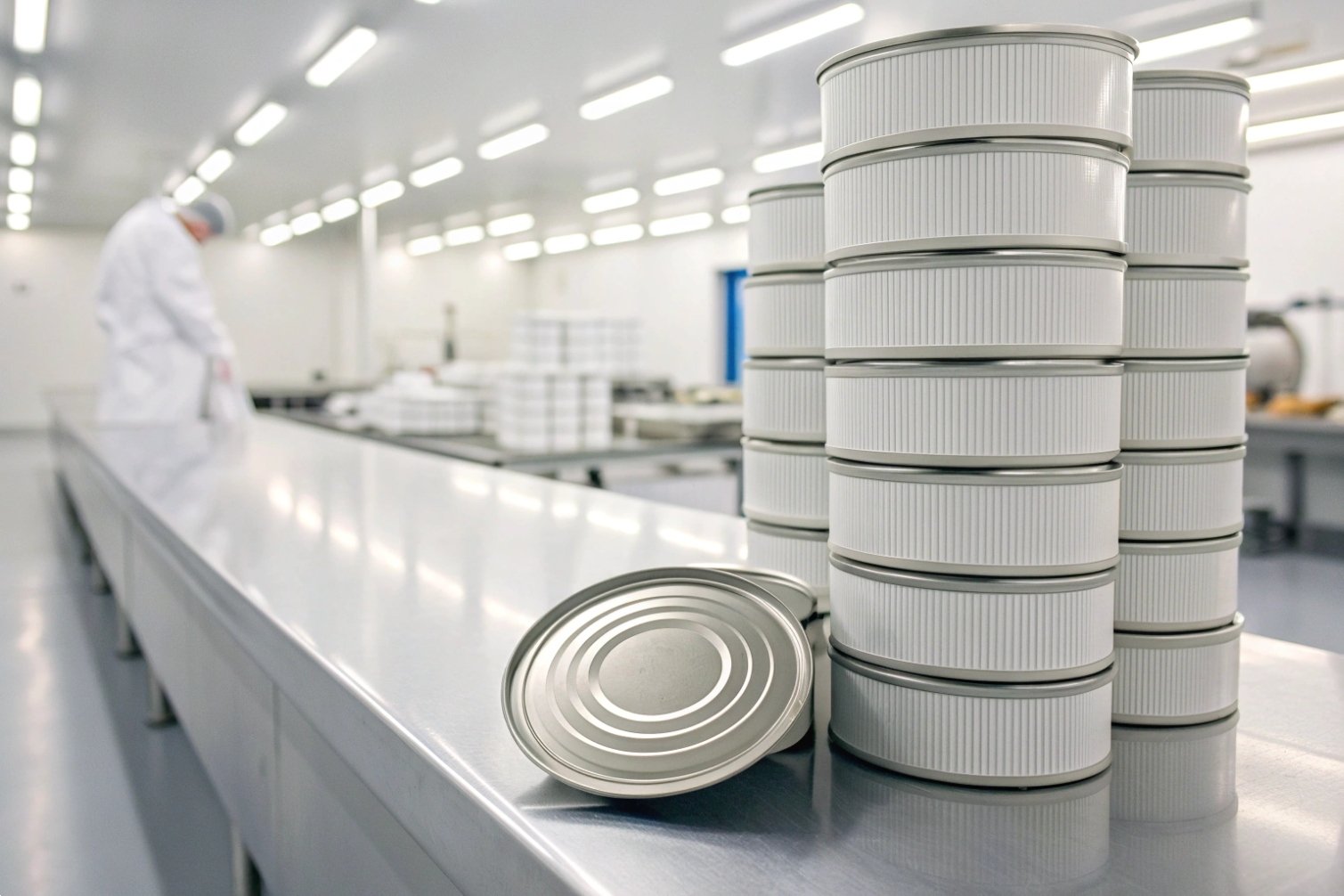
Finding the right supplier with requisite certifications can feel like finding a needle in a haystack. Finding certifications for quality and safety, such as ISO 9001 1 or BRCGS 2, is high on my list.
Answering the question, yes, many Easy Open Ends factories in China are certified with ISO 9001 for quality management systems. Some of them also hold other certifications, like FSSC 22000 3, ensuring higher standards of food safety management. These certifications are integral for maintaining consistent production processes, preventing defects, and emphasizing hazard control 4.
Understanding the landscape of certification is crucial. Let’s explore how these certifications work, their role in ensuring quality, and why they matter for Easy Open Ends manufacturing 5.
Can I receive copies of your current ISO 9001, BRCGS Packaging, SQF, or ISO 22000 certifications for my Easy Open Ends manufacturing facility in China?
Earning my trust requires proof of compliance and a factory’s willingness to share certification documents.
Providing copies of ISO 9001 or BRCGS certifications should be straightforward for any reputable manufacturer. Factories certify these credentials because they demonstrate their commitment to maintaining international quality and safety standards.

No certification is complete without proof. Requesting current certificates directly from manufacturers is a must to ensure their validity. Verification through official databases like IAF CertSearch 6 for ISO or certification body directories for BRCGS/FSSC confirms authenticity and up-to-date status. A well-verified certification adds a layer of confidence in production quality and safety practices 7.
Key Certifications
| Certification Standard | Focus Area | Common in Industry | Global Recognition |
|---|---|---|---|
| ISO 9001 | Quality Management Systems | Yes | Yes |
| FSSC 22000 | Food Safety Management Systems | Yes | Yes |
| BRCGS Packaging | Packaging Quality and Safety | Yes | Yes |
| SQF | Food Safety and Quality | Limited | Common in North America |
How do these certifications ensure consistent quality, food safety, and traceability for my Easy Open Ends throughout your production process?
Assurances around quality and safety are non-negotiable in my procurement checklist.
Such certifications ensure consistent production by enforcing rigorous protocols for quality control, food safety, and traceability. ISO 9001 ensures process consistency, while FSSC 22000 aligns with ISO 22000 standards 8 for food safety, emphasizing hazard analysis and critical control points (HACCP) for canning applications.

Traceability 9, a key aspect of these certifications, enables regular audits and stringent control measures throughout the manufacturing process. It allows for real-time tracking of production, ensuring compliance with international standards, thereby safeguarding consumer safety and satisfaction.
Process Breakdown
- Quality Control: Regular checks and balances as per ISO 9001.
- Food Safety: HACCP controls under FSSC 22000 certification.
- Traceability: Comprehensive tracking from raw materials to final product.
- Audit Protocols: Implementation of internal and external audit systems.
What is your process for supporting remote or on-site audits by my team to verify compliance with these certifications for my Easy Open Ends?
Being transparent and flexible with audits signals strong quality assurance and openness.
The process for supporting remote or on-site audits 10 is well-established in certified factories. Manufacturers coordinate with purchasing teams to facilitate regular audits, ensuring all certifications and compliance measures are thoroughly inspected.

Proactive engagement with client audit teams strengthens trust, allowing for seamless inspection of production processes. Factories can accommodate both remote audits—leveraging technology for virtual inspections—and on-site visits, guaranteeing clear visibility across all production stages.
Support Channels
| Audit Type | Methods Employed | Flexibility Offered |
|---|---|---|
| Remote Audits | Virtual tools like video conferencing | High |
| On-Site Audits | Physical inspection with guide teams | Moderate |
| Documentation Access | Online portals, direct mailing | High |
Are there any specific advantages or cost benefits for sourcing Easy Open Ends from a highly certified factory like yours?
Choosing a certified supplier impacts both operational efficacy and financial gains.
Sourcing from a certified factory not only provides quality assurance but also offers critical cost benefits. Certifications like ISO 9001 and FSSC 22000 can open doors to larger markets, enabling access to multinational food and beverage corporations. The streamlined processes lead to reduced waste, increased efficiency, and ultimately, cost savings which can be passed down to buyers.
The prestige of globally recognized certifications bolsters brand reputation and marketability, delivering added value. Reduced compliance risks and the ability to meet stricter international regulations help mitigate potential operational and legal costs.
Key Benefits
- Market Access: Entry to larger, regulated markets.
- Efficiency: Streamlined processes reduce operational costs.
- Reputation: Strengthened brand position and consumer trust.
- Compliance: Lower risks with adherence to safety standards.
Conclusion
Certifications like ISO 9001 and FSSC 22000 are more than just credentials; they are the backbone of product quality and safety assurance in the Easy Open Ends industry.
Footnotes
1. Official guide explaining the principles and benefits of the ISO 9001 Quality Management System. ↩︎
2. Resource detailing the global standard for packaging and packaging material safety, BRCGS. ↩︎
3. Information on the FSSC 22000 scheme for auditing and certification of food safety management systems. ↩︎
4. FDA’s explanation of Hazard Analysis and Critical Control Points (HACCP) for food processing. ↩︎
5. Overview of the specific processes and quality requirements in manufacturing Easy Open Ends. ↩︎
6. Database for verifying the authenticity and status of management system certifications globally, including ISO. ↩︎
7. Best practices and standards for maintaining quality and safety throughout the food manufacturing process. ↩︎
8. Details on the international standard that specifies requirements for a food safety management system. ↩︎
9. Explanation of how traceability works in the supply chain to track products from source to consumer. ↩︎
10. Guide to conducting remote and on-site audits for compliance verification using various technologies. ↩︎