

Have you ever found yourself worrying about whether the Easy Open Ends (EOE) you ordered come with the essential quality documents needed for your business? I get it, these documents are crucial in proving quality and ensuring smooth operations for us.
Typically, it depends on the agreement with the supplier 1. If your purchase order includes a request for these documents, you should receive them. Nonetheless, not every shipment comes automatically with COAs and reports without specification.
Understanding the protocols behind these processes can help ensure you receive what you need.
Can I Consistently Receive a COA and Detailed Test Reports?
Ensuring every shipment includes a Certificate of Analysis 2 and detailed reports might keep you up at night. I was there too—uncertain if the next order would come with the documents I rely on.
There’s a solution. Modify your purchase orders 3 to explicitly require COAs and test reports. This clear communication can standardize the process with your suppliers, so no matter the batch, you receive everything needed.

Deeping into this, we unravel the specifics of what you can expect from your supplier, understanding the tests that are routinely performed.
What Suppliers Normally Provide?
Suppliers conduct a variety of checks on EOEs to ensure quality control in manufacturing 4. Here is an overview:
| Check Type | Details | Purpose |
|---|---|---|
| Dimensional Checks | Curl, countersink, diameter, panel depth | Assure precise dimensions |
| Score Residual Measurements | Accuracy of lines | Opening ease vs. safety |
| Opening Force Tests | Strength required to open | User-friendly design |
| Buckle/Burst Tests | Pressure resistance | Integrity under pressure |
| Visual/Vision Inspection | Surface and structural inspection | Identify visible defects |
These routine checks are crucial. Understanding this process gives you confidence in your supplier’s quality commitments.
What Specific Tests Are Included in Your Performance Reports?
This question looms large for anyone striving to ensure top-notch quality assurance 5. Ever felt like you’re shooting in the dark without knowing what goes into the performance reports?
Have a look at the performance reports. They typically include a variety of critical tests that cover essential parameters like opening force and sealing integrity. This ensures that the product is not only up to standard but also safe and reliable.
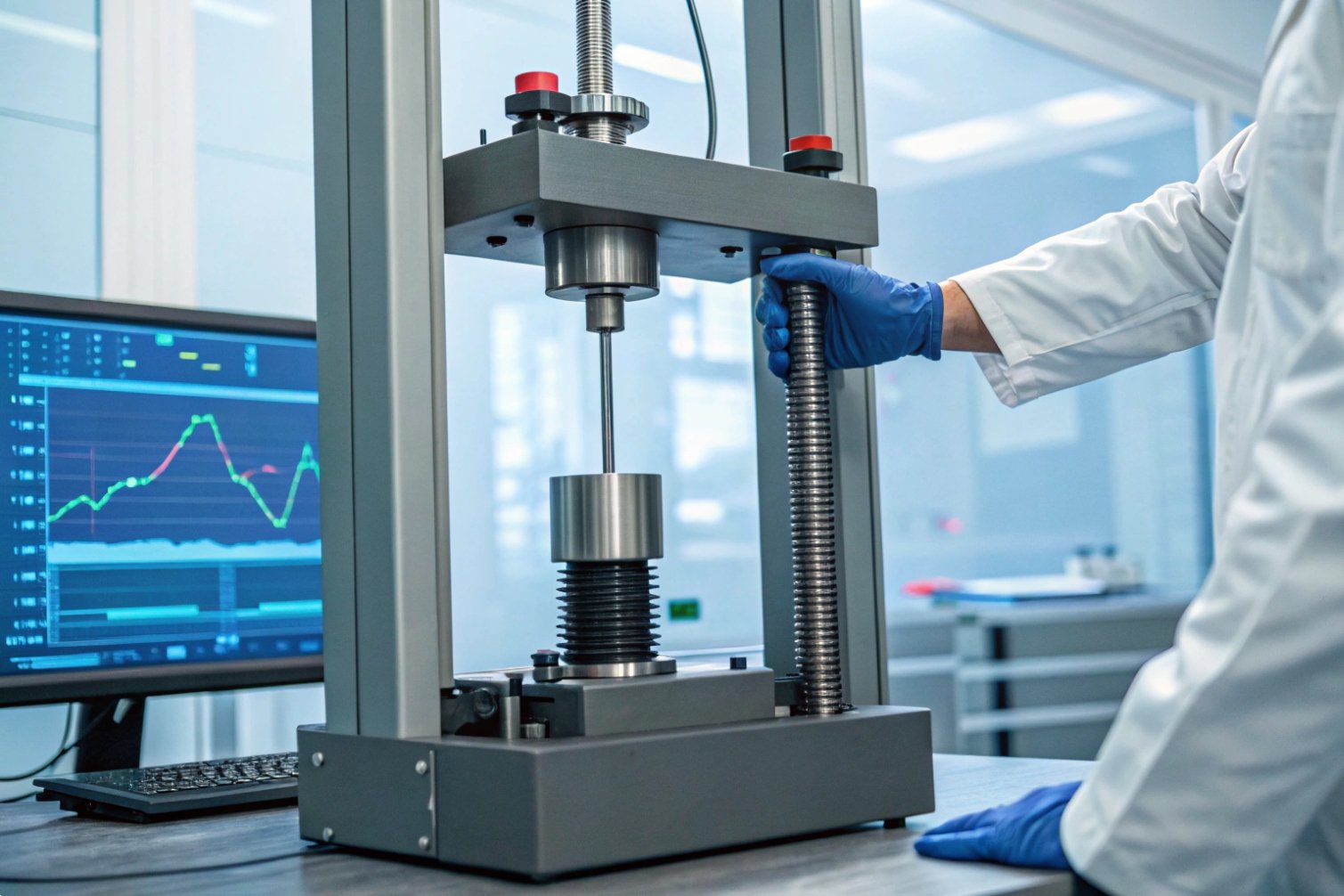
Now, let’s go deeper, explore the specifics of these performance assessments and understand what it means for you.
Key Tests Include:
-
Opening Force Test: Ensures the EOE can be opened with minimal effort, enhancing user experience 6.
-
Sealing Integrity Check: Confirms that seals withstand pressure, preserving the contents safely.
-
Buckle/Burst Test: Tests the product’s resilience under pressure, ensuring structural soundness.
A breakdown of tests provides insights into what each entails:
| Test | Objective | Key Parameter |
|---|---|---|
| Opening Force | Ease of access | User-friendliness |
| Sealing Integrity | Ensures no leakages | Product safety |
| Buckle/Burst Pressure | Determines resistance to internal pressure | Durability |
| Coating Integrity | Adherence and durability of internal coatings | Prevent contamination |
Such precise indicators in the reports guarantee you’re in control no matter what.
How Do You Ensure the Accuracy and Reliability of the Data?
Accuracy and reliability 7 are not just words—they’re a promise to your customers and stakeholders. Fulfilling this promise begins with understanding how data accuracy is achieved.
By utilizing advanced quality control systems 8, suppliers ensure data is meticulously gathered and recorded. This assures that every piece of information you see is reliable and precise.

Let’s look at how these processes reinforce trust and create dependable products.
Factors Ensuring Reliability:
-
Automated Quality Systems: Use consistently captured data for unprecedented accuracy.
-
Comprehensive Reporting: Offers transparency, making verification straightforward.
-
Controlled Environments: Testing in consistent conditions ensures replicable results.
| Factor | Impact on Reliability | Implementation |
|---|---|---|
| Automation | Minimizes human error | Advanced systems |
| Clear Documentation | Validates and cross-verifies data | Comprehensive reports |
| Standardized Conditions | Ensures consistency in results | Controlled environments |
Combining these factors means you can rest easy knowing the data is as reliable as it can get.
Is There an Additional Cost for These Comprehensive Quality Documents?
Ever wondered if the peace of mind from comprehensive quality documents comes with a price? It’s a common concern that can impact your bottom line 9.
Typically, these documents can be standard inclusions in your order. However, it’s essential to clarify this with your supplier upfront to avoid unforeseen costs.

Understanding the pricing dynamics 10 is crucial for financial planning and ensuring no hidden surprises lurk in your supply chain agreements.
Navigating Costs:
-
Clarify During Negotiations: Discuss document provisions in your supplier contract.
-
Standard Inclusions: Many suppliers include these in regulated industries like food and beverage.
-
Cost-Benefit Analysis: Weigh the benefits of detailed reports against potential additional costs.
| Cost Element | Discussion Point | Financial Impact |
|---|---|---|
| Inclusion in Contract | Ensures typical provision of documents | Cost predictability |
| Regulatory Requirements | Often necessitate standard COA provision | Standard cost inclusion |
| Supplier Negotiations | Can clarify potential additional fees | Cost management |
Understanding these elements can help you better prepare and negotiate for your business needs.
Conclusion
Securing COAs and performance reports is all about precise agreements and clear communication. Consistent documentation paves the way for operational transparency, quality assurance, and meeting compliance requirements.
Footnotes
1. Review the elements of a formal supplier agreement, which defines terms like quality standards and documentation. ↩︎
2. Find out what a Certificate of Analysis (COA) is and why it’s a vital quality and compliance document. ↩︎
3. Tips for managing and modifying purchase orders to explicitly require quality documentation like COAs and test reports. ↩︎
4. Understand the purpose, techniques, and benefits of quality control in the manufacturing process for products like EOEs. ↩︎
5. Explore top-notch quality assurance companies and their strategies for high-standard product compliance and safety. ↩︎
6. Read about design strategies that can make packaging more functional and improve the overall experience for the end-user. ↩︎
7. Learn about the standards and best practices for measuring and maintaining data reliability in manufacturing and quality reports. ↩︎
8. Discover how advanced, automated quality control systems are used in packaging for precise defect detection and inspection. ↩︎
9. See how accurate and complete documentation practices positively impact a company’s revenue, compliance, and financial health. ↩︎
10. Insights into how the costs and pricing for goods and services are determined and negotiated within a supply chain. ↩︎